The Ultimate SEO Pillar Guide for Digital Marketers
📌 Pillar Page Overview (SEO-Optimized)
Primary Keyword: AI hyper-personalization
Secondary Keywords: AI content personalization, hyper-personalized marketing, AI in digital marketing, personalized content at scale, AI-driven marketing
Search Intent: Informational + strategic (CMOs, growth marketers, founders, agencies)
Content Goal: Thought leadership + evergreen reference hub
🧭 Table of Contents
- What Is Hyper-Personalization?
- Why Traditional Personalization No Longer Works
- The Role of AI in Hyper-Personalized Content
- How AI Hyper-Personalization Works (Step-by-Step)
- Key Use Cases Across the Marketing Funnel
- Tools & Tech Stack for AI Hyper-Personalization
- KPIs & Measurement: Proving ROI
- Challenges, Ethics & Data Privacy
- The Future of Hyper-Personalized Marketing
- Final Takeaway for Marketing Leaders
1️⃣ What Is Hyper-Personalization?
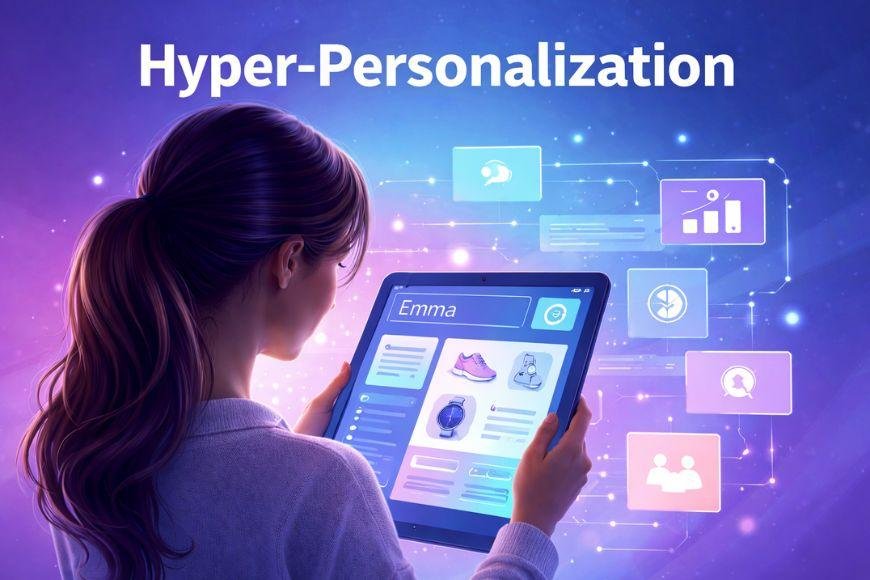
Hyper-personalization is the evolution of traditional personalization. Instead of relying on static data points like name, location, or industry, AI-powered hyper-personalization uses real-time behavioral, contextual, and predictive data to deliver content uniquely tailored to each individual.
🔑 In simple terms:
Personalization = segments
Hyper-personalization = individuals at scale
2️⃣ Why Traditional Personalization No Longer Works
For years, marketers relied on:
- Basic segmentation
- Rule-based automation
- Static buyer personas
Today’s audiences expect Netflix-level relevance everywhere.
The Cost of Generic Content
- ❌ Low engagement rates
- ❌ Poor conversion performance
- ❌ Brand fatigue & trust erosion
- ❌ Inefficient ad spend
Modern buyers don’t compare you to competitors—they compare you to the best experience they’ve ever had.
3️⃣ The Role of AI in Hyper-Personalized Content
AI is the only scalable solution to true 1:1 marketing.
Core AI Capabilities Powering Hyper-Personalization:
- Machine Learning: Identifies patterns humans can’t see
- Large Language Models (LLMs): Generate adaptive copy at scale
- Predictive Analytics: Anticipates next-best actions
- Real-Time Decisioning: Adjusts content instantly
Without AI, hyper-personalization is operationally impossible.
4️⃣ How AI Hyper-Personalization Works (Step-by-Step)
Step 1: Data Unification
Centralize customer data from:
- CRM
- Website analytics
- Email platforms
- Paid media
- Product usage
➡️ Customer Data Platforms (CDPs) are critical here.
Step 2: AI-Driven Micro-Segmentation
AI identifies intent-based clusters such as:
- First-time visitors showing buying signals
- Returning users comparing alternatives
- High-intent users close to conversion
These segments update dynamically, not manually.
Step 3: Dynamic Content Generation
AI generates or adapts:
- Headlines
- Body copy
- CTAs
- Product recommendations
- Visual concepts
All tailored to context, intent, and behavior.
Step 4: Real-Time Delivery
Content adapts instantly across:
- Websites
- Emails
- Ads
- Landing pages
- In-app experiences
Every touchpoint feels intentional—not automated.
Step 5: Continuous Learning & Optimization
AI models learn from:
- Click-through rates
- Time on page
- Conversion data
- Drop-off points
The system improves without human intervention.
5️⃣ Key Use Cases Across the Marketing Funnel
🔝 Top of Funnel (Awareness)
- Personalized ad copy by intent
- Dynamic landing page headlines
- Context-aware blog recommendations
🔁 Middle of Funnel (Consideration)
- AI-driven email nurturing
- Personalized case studies
- Industry-specific messaging
🔒 Bottom of Funnel (Conversion)
- Predictive CTAs
- Personalized pricing or offers
- Real-time objection handling
♻️ Retention & Expansion
- AI-powered onboarding
- Usage-based upsell messaging
- Churn prediction & prevention
6️⃣ Tools & Tech Stack for AI Hyper-Personalization
Core Categories:
- CDPs: Data unification
- AI Content Engines: Copy & creative generation
- Marketing Automation Platforms: Execution
- Analytics & BI Tools: Performance tracking
💡 Advanced teams build custom AI workflows (e.g., Gemini Gems, internal LLM apps) connected directly to their data stack.
7️⃣ KPIs & Measurement: Proving ROI
Track metrics that reflect relevance, not volume:
- Engagement rate per user
- Conversion rate lift
- Time-to-conversion
- Customer lifetime value (CLV)
- Cost per acquisition (CPA)
Hyper-personalization should increase efficiency, not complexity.
8️⃣ Challenges, Ethics & Data Privacy
AI personalization must be:
- Transparent
- Consent-driven
- Privacy-compliant
Key Considerations:
- GDPR & data regulations
- Bias in training data
- Over-personalization risk (“creepy factor”)
Trust is the real competitive advantage.
9️⃣ The Future of Hyper-Personalized Marketing
Next-generation personalization will include:
- 🎥 Dynamic video personalization
- 🎧 Adaptive audio & voice content
- 🛍️ AI-generated experiences per user
- 🌍 Cultural & emotional intelligence modeling
Marketing is moving from campaigns → conversations → experiences.
🔟 Final Takeaway for Marketing Leaders
Hyper-personalization powered by AI is no longer optional—it’s foundational.
Brands that win will:
- Understand users deeply
- Adapt content instantly
- Scale relevance without scaling teams
Generic marketing is invisible.
Hyper-personalized marketing is unforgettable.